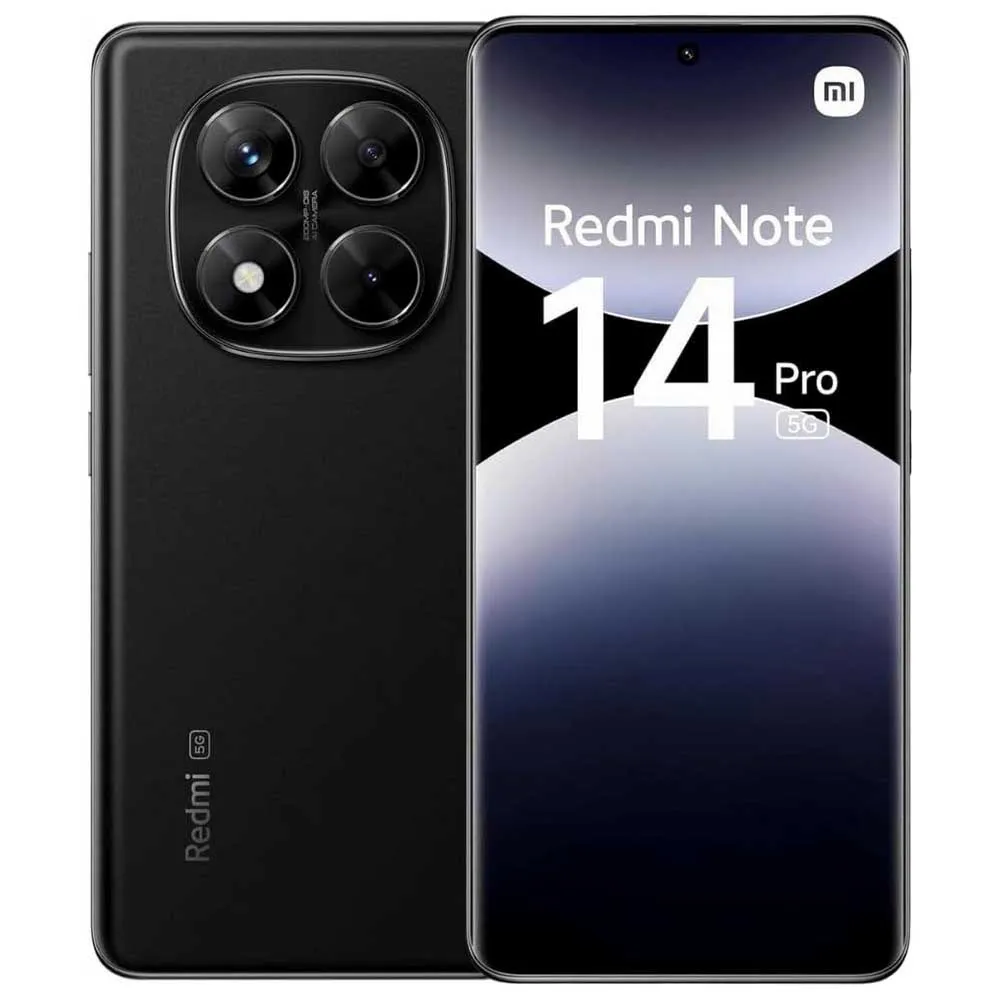
A 200MP sensor with optical stabilisation, at a third of what the same class of camera costs elsewhere in Xiaomi's range. The catch is not the price.
The Redmi Note 14 Pro costs ৳32,999 in Bangladesh for the 8GB/256GB variant with official warranty, and ৳36,999 for 12GB/512GB. Grey market units sell around ৳27,700 and ৳31,500 to ৳32,500. It carries a 200MP main camera with OIS on a large 1/1.4-inch sensor, Gorilla Glass Victus 2, and 45W charging.
Price by variant
Variant
Official
Unofficial
8GB + 256GB
৳32,999
৳27,700
12GB + 512GB
৳36,999
৳31,500 – 32,500
৳4,000 for four extra gigabytes of RAM and a doubling of storage is decent value, and unlike most phones in this class the 12GB variant is genuinely worth considering — the 200MP mode produces very large files and fills storage faster than you expect. That said, the phone takes a microSD card up to 1TB, so storage alone is not a reason to upgrade. Buy the 12/512 for the RAM, not the space.
The same sensor class as a ৳60,000 phone
This is the reason to look at this phone, and almost nobody frames it this way.
The Note 14 Pro uses a 200MP main camera on a 1/1.4-inch sensor with optical stabilisation. The Redmi Note 15 Pro+, which costs ৳59,999, uses a 200MP main camera on a 1/1.4-inch sensor with optical stabilisation. Same size, same approach, a generation apart.
Sensor size is what actually determines how much light a camera collects, and it matters far more than the megapixel figure. A 1/1.4-inch sensor at ৳32,999 is unusual. Most phones at this price use sensors around 1/1.67 inches or smaller, which is a meaningful step down in low light.
In practice you shoot at 12MP by default, with the sensor combining pixels for cleaner results. The full 200MP mode exists for when you want to crop hard later. Add OIS and you get photographs after dark that phones costing more will not match.
The catch: no 4K video, at all
For a phone marketed on its camera, this is a strange omission. Video recording caps at 1080p, at 30 or 60 frames per second. There is no 4K mode to switch on.
The stills hardware is a class above the price. The video hardware is a class below it. If you shoot for Facebook and WhatsApp, 1080p is more than those platforms preserve anyway and you will never notice. If you shoot for YouTube, for a business, or for anything you will still be watching in five years, this is a hard ceiling and it should probably send you elsewhere.
Worth saying plainly: this same limitation applies to the standard Redmi Note 14. It is a decision Xiaomi made across the generation, and it was fixed in the Note 15 series, which records 4K.
Built better than the price suggests
Gorilla Glass Victus 2 on the front is the notable one. That is flagship-tier cover glass, the same generation Samsung fits on phones costing three times as much, and it resists the scratching that makes a two-year-old screen look worn out.
The phone is also 180 grams, which is light for a 6.67-inch device with a 5500mAh battery. Compare that against the 207 grams of the Note 15 Pro+ and you feel the difference immediately. IP64 sealing handles rain and dust, though not submersion.
Charging runs at 45W, a real improvement over the 33W on the standard Note 14, and quick enough that a top-up before leaving the house is genuinely useful.
Official vs unofficial
The gap sits at ৳5,300 on the 8/256 and around ৳4,500 on the 12/512 — proportionally narrower than on the cheaper Note 14, which is unusual and works in your favour.
Xiaomi Bangladesh's service network is one of the widest among Chinese brands here, with authorised centres well outside Dhaka. On a camera phone you plan to keep three or four years, a warranty that covers the camera module is worth more than the saving. Buy official on this one.
3.5mm headphone jack · IR blaster · FM radio · stereo speakers · Bluetooth 5.3
180 grams, and why that is the underrated spec here
Phone weight gets ignored on spec sheets because it sounds boring next to megapixels. It should not be. You hold this thing for several hours a day, often one-handed on a bus or while walking. At 180 grams the Note 14 Pro is among the lightest phones in its class, and the difference against a 200-gram rival is noticeable within a day of use — less wrist strain, easier one-handed reach, less weight dragging on a shirt pocket. Xiaomi achieved it partly with a plastic back, which some buyers will read as cheap. In daily use it is the better trade.
Who this phone is for
Buy it if…
You want the best camera hardware per taka. A 1/1.4-inch 200MP sensor with OIS at ৳33,000 has no real competitor at this price in Bangladesh. It is the same sensor class as phones costing double.
You want a phone that survives its own lifespan. Gorilla Glass Victus 2 is genuinely flagship-grade cover glass, and it shows after two years of pocket wear.
You want light and fast-charging. 180 grams with 45W charging is a combination most rivals at this price cannot match.
Skip it if…
You shoot video. No 4K recording at all. On a camera-led phone this is the omission that matters most.
You are a heavy gamer. The Helio G100 Ultra is a modest step up from the G99. It handles mainstream titles and nothing more demanding.
You want current-generation software. This launched on Android 14 in January 2025 and its upgrade runway is shorter than a 2026 phone's.
Alternatives around ৳33,000
Redmi Note 15 5G — ৳4,000 more for 5G, 4K video and a much brighter screen, with a smaller 108MP sensor.
Samsung Galaxy A17 5G — six years of updates and a wider service network, but far weaker camera hardware.
Redmi Note 15 Pro+ 5G — the same sensor class with 4K video, IP69K durability and 100W charging, at ৳60,000.
Where to buy in Bangladesh
Xiaomi Bangladesh showrooms, Star Tech, Gadget & Gear and Pickaboo carry official units. At ৳32,999 on 0% EMI across twelve months that is roughly ৳2,750 a month.
Grey stock circulates at Bashundhara City and through online sellers, with the 12/512 showing a wider spread than the base model — worth calling two or three shops. Check the IMEI with BTRC before paying, and confirm the box seal is intact.
Common questions
What is the Redmi Note 14 Pro price in Bangladesh?
৳32,999 official for 8GB/256GB and ৳36,999 for 12GB/512GB. Grey market units sell around ৳27,700 and ৳31,500 to ৳32,500.
Does the Redmi Note 14 Pro record 4K video?
No. Video recording tops out at 1080p at 30 or 60fps, which is the phone’s main limitation given its camera hardware.
Does the Redmi Note 14 Pro have OIS?
Yes. The 200MP main camera has optical image stabilisation on a large 1/1.4-inch sensor.
Does the Redmi Note 14 Pro support microSD?
Yes, cards up to 1TB, though the slot is shared with the second SIM on some variants.
How fast does the Redmi Note 14 Pro charge?
45W wired charging, noticeably quicker than the 33W on the standard Redmi Note 14.
Prices last checked: .
Bangladeshi market prices change often — confirm with the retailer before you buy.